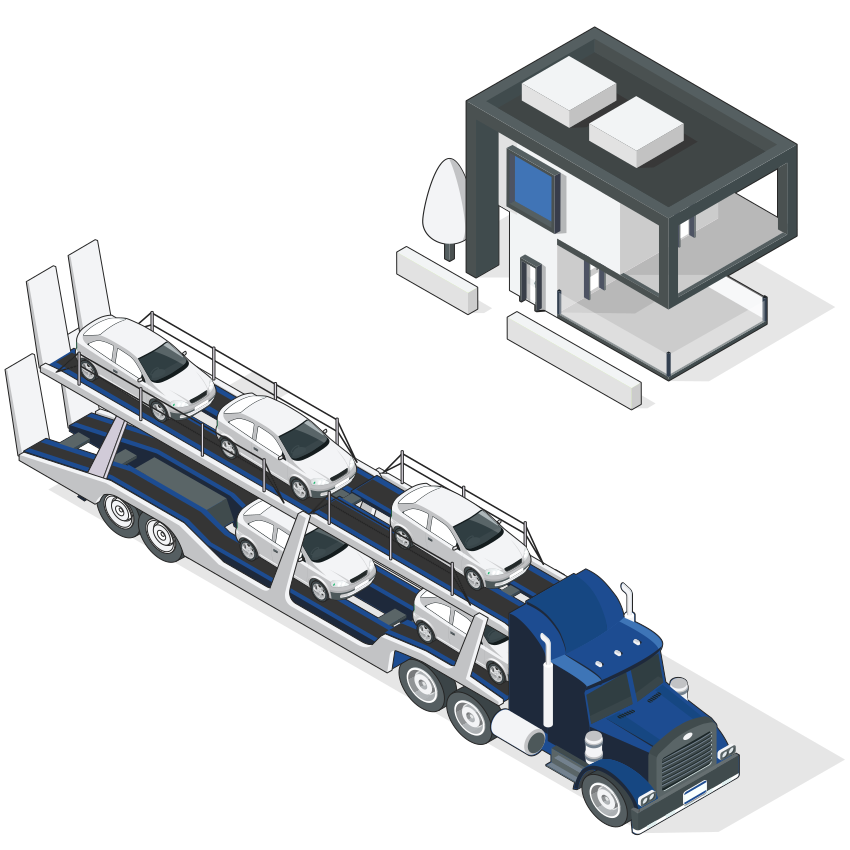
Interlane operates coast-to-coast vehicle transport from Halifax to Burnaby with full insurance coverage, real-time shipment tracking, and your choice of open or enclosed transport to match your vehicle and budget.
Whether you're relocating across the country or purchasing a vehicle from the other side of Canada, we manage every kilometre of the journey from Nova Scotia to British Columbia so you don't have to.
Shipping costs from Halifax to Burnaby typically range from $2,683 to $7,470 CAD depending on transport type and seasonal demand. Delivery typically takes 11 business days.
| Option | Low | Average | High | Frequency | Notes |
|---|---|---|---|---|---|
| $2,988 | $3,320 | $3,652 | Multiple departures per week | Residential pickup and delivery from Halifax to Burnaby | |
| $2,683 | $2,982 | $3,280 | Weekly service | Cost-effective option for flexible drop-off and pickup | |
| $6,112 | $6,791 | $7,470 | By special request | Ideal for classic, luxury, or exotic cars |
Low
$2,988
Avg
$3,320
High
$3,652
Residential pickup and delivery from Halifax to Burnaby
Low
$2,683
Avg
$2,982
High
$3,280
Cost-effective option for flexible drop-off and pickup
Low
$6,112
Avg
$6,791
High
$7,470
Ideal for classic, luxury, or exotic cars
The Halifax to Burnaby corridor is one of Canada's longest domestic vehicle transport routes, drawing a wide mix of customers — families relocating for work in Metro Vancouver, dealerships moving inventory between Atlantic and Pacific markets, corporate transferees on tight timelines, online car buyers completing cross-country purchases, and snowbirds repositioning vehicles between coasts. Interlane handles the full shipment end-to-end, from pickup in Halifax to final delivery at your door in Burnaby.
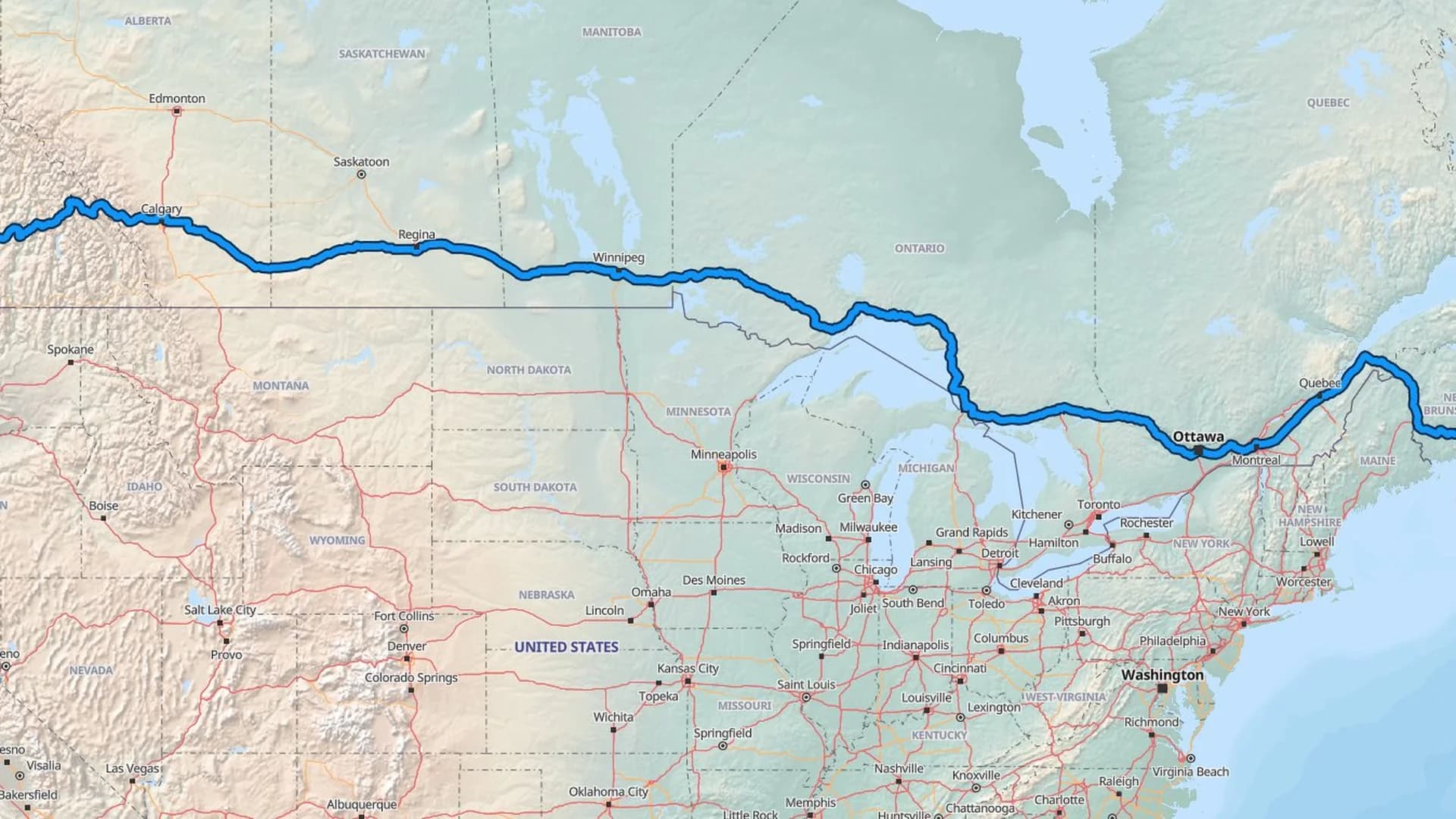
This route crosses six provinces and stretches over 6,000 kilometres. From Halifax, transport tracks westward through New Brunswick and Quebec via the Trans-Canada, through Ontario via Montreal, Kingston, and Toronto, across Northern Ontario through Sudbury into Manitoba, then westward through Winnipeg, Regina, and Calgary. The final stretch is the most demanding: the Trans-Canada climbs into the Rocky Mountains through Banff and Kicking Horse Pass, crosses the Selkirk Mountains through Rogers Pass, then descends into the Fraser Valley through Kamloops and Merritt before reaching Burnaby via Highway 1.

Enter your vehicle details and route information on our website to receive an accurate quote for transport from Halifax to Burnaby, with options for open or enclosed service.
Confirm your pickup window, select your preferred service level, and receive your booking confirmation with shipment details and contact information for your transport team.
Our driver meets you at your specified location in Halifax — whether that's a home in Dartmouth, a dealership along Robie Street, the port area near Barrington Street, or anywhere else across the HRM — inspects the vehicle, and loads it for departure.
Your vehicle travels west along the Trans-Canada through New Brunswick, Quebec, and Ontario, across the prairies through Winnipeg, Regina, and Calgary, then climbs through Banff and Rogers Pass before descending through the Fraser Valley into Metro Vancouver.
Your vehicle is delivered directly to your address in Burnaby — whether that's a residence near Metrotown, a dealership along Lougheed Highway, or a commercial address in the Brentwood or Edmonds area — with a final inspection completed on the spot.
Enter your vehicle details and route information on our website to receive an accurate quote for transport from Halifax to Burnaby, with options for open or enclosed service.
Confirm your pickup window, select your preferred service level, and receive your booking confirmation with shipment details and contact information for your transport team.
Our driver meets you at your specified location in Halifax — whether that's a home in Dartmouth, a dealership along Robie Street, the port area near Barrington Street, or anywhere else across the HRM — inspects the vehicle, and loads it for departure.
Your vehicle travels west along the Trans-Canada through New Brunswick, Quebec, and Ontario, across the prairies through Winnipeg, Regina, and Calgary, then climbs through Banff and Rogers Pass before descending through the Fraser Valley into Metro Vancouver.
Your vehicle is delivered directly to your address in Burnaby — whether that's a residence near Metrotown, a dealership along Lougheed Highway, or a commercial address in the Brentwood or Edmonds area — with a final inspection completed on the spot.

Rocky Mountain and Rogers Pass Corridor Experience
Prairie Crossing Reliability
Great Lakes Corridor Routing
Atlantic Canada Pickup Coverage
Fraser Valley and Metro Vancouver Delivery Precision
Your car is dropped off at a designated shipping terminal and picked up at another terminal near the destination.
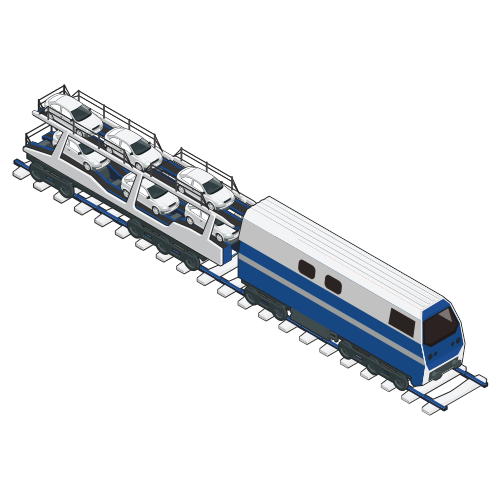
The shipping company picks up your car from your specified location and delivers it directly to the destination address via rail.
Your car is picked up at a designated address and dropped off at another address, typically your home or office.
Your car is transported in a covered truck or trailer, protecting it from weather, debris, and road conditions.
Explore our specialized vehicle transport options for every need.
On a route that spans over 6,000 kilometres and multiple mountain passes, express scheduling prioritizes your vehicle for the earliest available departure from Halifax and maintains forward momentum through the prairie and mountain sections where weather delays are most common. This service is best suited for time-sensitive relocations or corporate transfers where the delivery window in Burnaby is fixed.
SUVs and trucks are loaded with height and weight distribution in mind — important through the steep grades of Kicking Horse Pass and Rogers Pass where load stability on mountain descents is a real operational factor. Larger vehicles are secured using appropriate tie-down positioning for a cross-country haul that includes some of the most demanding road geometry in Canada.
Electric vehicles require careful management of state of charge before loading — particularly on a route where the vehicle will be on a carrier for an extended period crossing multiple climate zones from Atlantic humidity through prairie cold to Pacific coastal conditions. Interlane's team coordinates pre-load charge levels and handles EVs with attention to the manufacturer guidance relevant to long-haul transport.
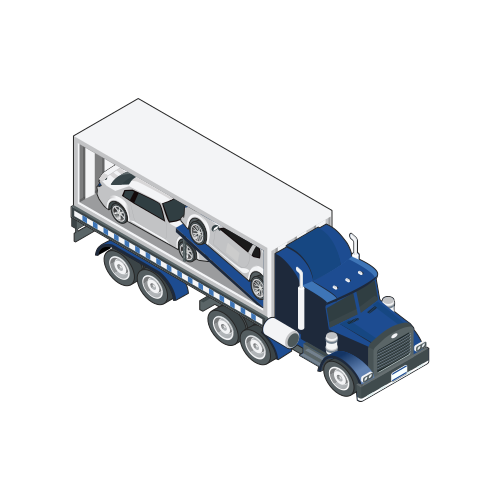
Enclosed transport is the standard recommendation for luxury vehicles on this corridor, shielding paint and exterior surfaces from gravel, road salt residue, and debris through the Rocky Mountain and Trans-Canada sections where road conditions can be unpredictable depending on season. Your vehicle travels in a fully enclosed trailer from Halifax with no exposure to the elements for the entire journey to Burnaby.
Antique and classic vehicles traveling from Halifax to Burnaby face the full range of Canadian climate variability — Atlantic moisture, prairie temperature swings, and mountain cold — all of which make enclosed transport the right choice for protecting original finishes, rubber seals, and older mechanical components. Interlane loads classic vehicles with the care appropriate to their age and value.
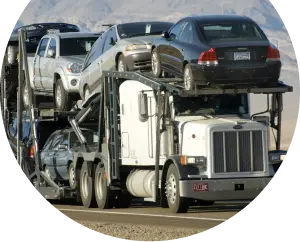
Open transport on the Halifax to Burnaby route offers the most cost-effective way to move a standard vehicle across the country, and the vast majority of vehicles shipped on this corridor travel safely via open carrier year-round. Flexible pickup windows allow Interlane to consolidate loads efficiently, which keeps costs lower without compromising on insurance coverage or delivery service to your Burnaby address.
Not sure which car shipping option is right for you? Our team is available 24/7 to answer your questions about routes, costs, and delivery times. Give us a call or send us a message — we’re happy to help.
How much does it cost to ship a car from Halifax to Burnaby?
Shipping a car from Halifax to Burnaby typically ranges from $2,683 to $7,470 CAD depending on the service level you choose and the time of year. Open transport is the more affordable option, while enclosed transport carries a premium worth considering for luxury, classic, or high-value vehicles. Costs can also shift seasonally — winter shipments through the Rockies and prairies may be priced differently due to weather-related complexity on this corridor.
How long does it take to ship a car from Halifax to Burnaby?
Transit on the Halifax to Burnaby route takes approximately 11 business days under standard conditions, though this can vary based on departure timing, weather in the Rocky Mountain passes, and road conditions across Northern Ontario and the prairies. Rogers Pass and the Kicking Horse corridor are subject to closures and slowdowns in winter months, which can extend transit on the western leg of the trip. Interlane keeps you updated throughout the journey so you always know where your vehicle is.
Is my vehicle insured during transport?
Yes — your vehicle is covered by full cargo insurance from the moment it's loaded in Halifax to the moment it's delivered in Burnaby. A condition inspection report is completed at pickup and reviewed again at delivery so any pre-existing marks are documented before the vehicle leaves your hands. In the unlikely event of a transport-related incident, Interlane's insurance handles the claim directly.
Can I leave personal belongings in my car during shipping?
We strongly recommend removing all personal belongings before your vehicle is picked up in Halifax. Personal items are not covered under cargo insurance, and loose objects can shift during the mountain descent sections of the route — particularly through the steep grades of Rogers Pass and Kicking Horse — potentially damaging your vehicle's interior.
Is enclosed transport available for this route?
Yes, enclosed transport is available for the full Halifax to Burnaby corridor and is the recommended option for luxury, exotic, classic, or low-clearance vehicles making this cross-country run. The route passes through gravel-prone mountain highway sections, exposed prairie stretches with road debris, and areas where winter road treatment leaves salt and chemical residue on open trailer equipment. Enclosed transport eliminates all of that exposure for the entire journey.